The "Manhattan Optimist Club Bulletin" Vol. 2026 #24 3-18-26
VOLUME 2026 MARCH 18 NUMBER 24
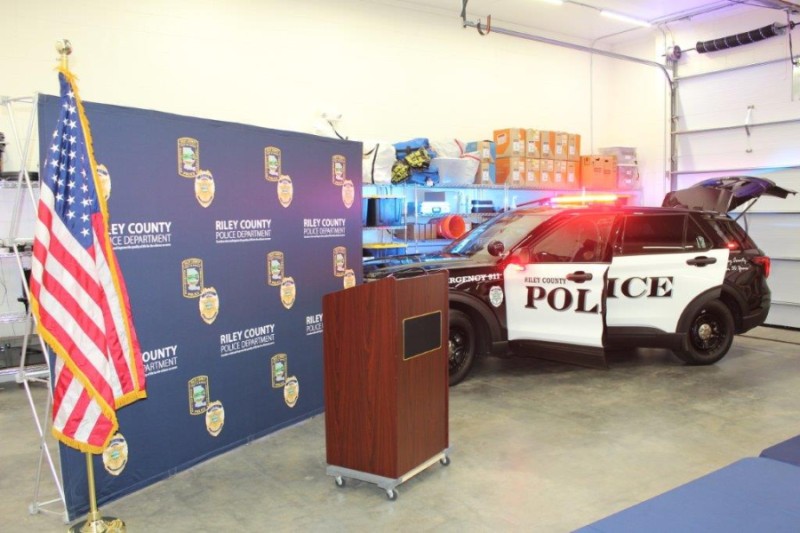
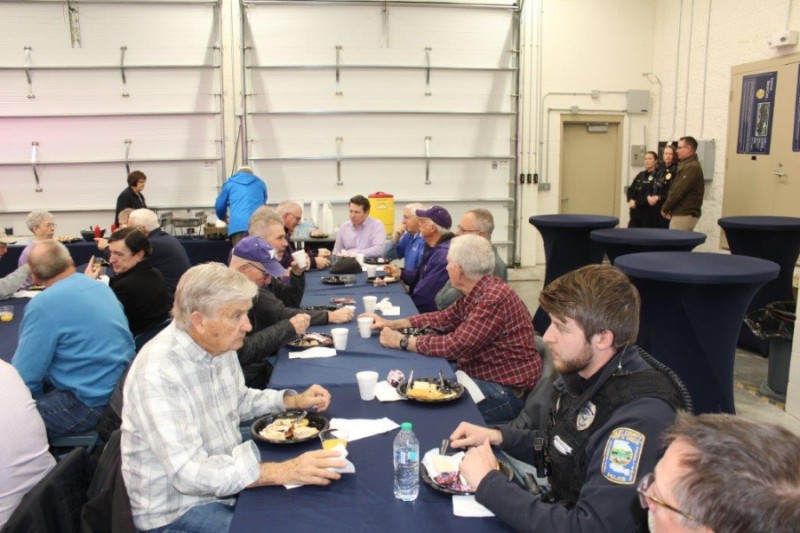
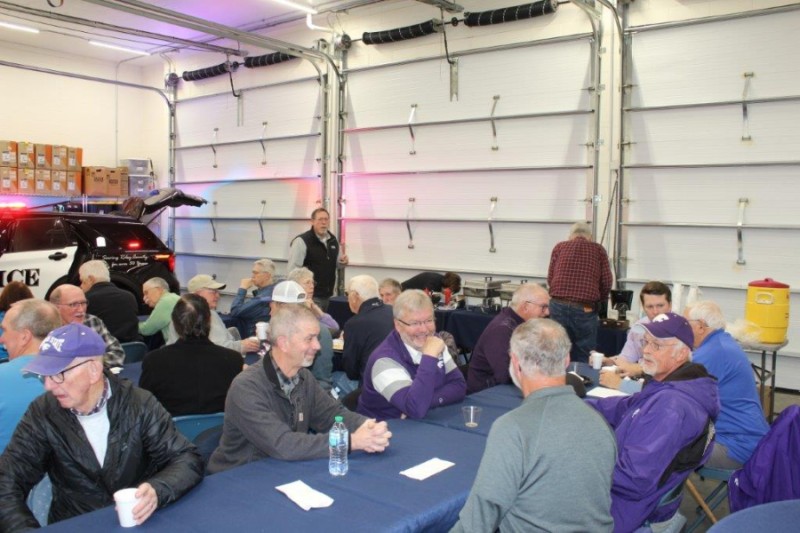
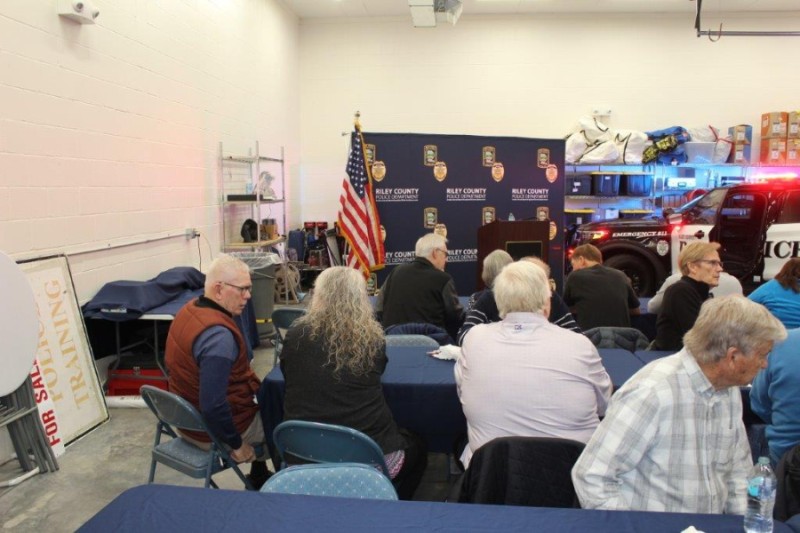
The Manhattan Optimist Club met at the Riley County Police Department for their breakfast meeting and tour of the RCPD facilities. President Kelly Karl welcomed the membership and guests, and Greg Wurst presented a reflection. The flag salute followed.
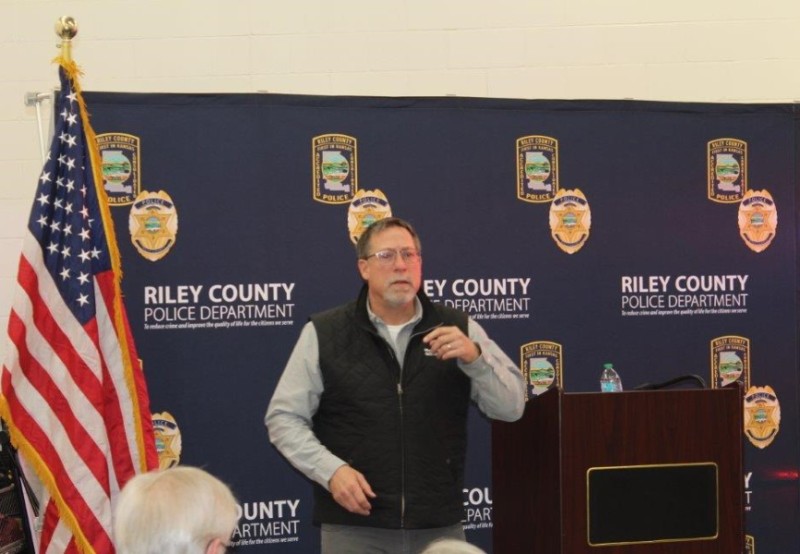
Special thanks to Gary Lloyd for making the arrangements for our meeting at RCPD.
Kelly Karl introduced Daryl Ascher, Operational Services & Community Engagement Major, who introduced Erin Freidline, Deputy Director.
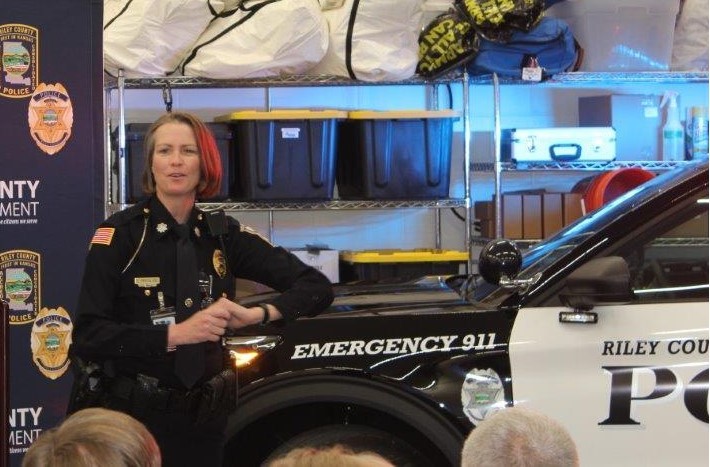
Erin welcomed the Optimist to “our garage” where we had breakfast. The Riley County Police Department has about 425 employees, and Director Brian Peete runs it like a CEO. The RCPD has its own IT, budgeting, human resources etc. The also have the jail and have about 110-120 inmates. They have 113 officers at the RCPD who keep the community safe.

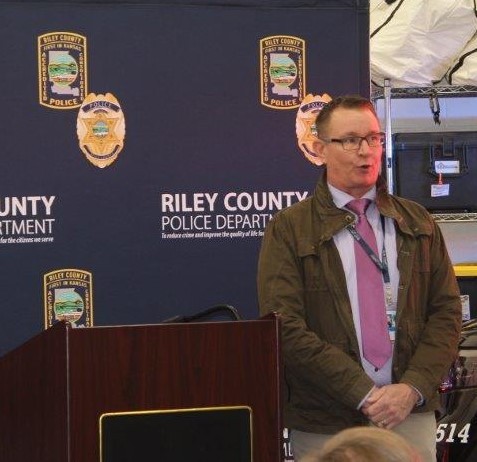
Mark French, Corrections Major, shared some rules for visiting the jail. They are a very transparent organization. The jail tour usually lasts an hour, however with a group of this size, even split into two groups; it is large for the space. He offered to take a small group 6-8 on a full tour at a later date. Pocket knives or things like that will need to be left with him before entry. Also, no photos are allowed in the jail.
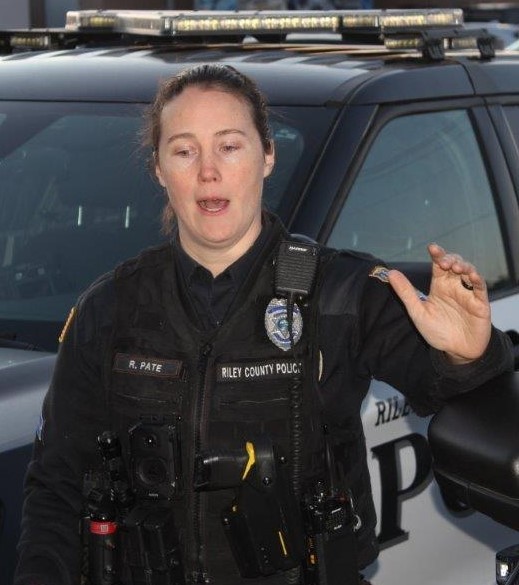
Rachele Pate, Corporal, also assisted with the tour.
Daryl Ascher split the members present into two groups for the tours. One group remained in the breakfast area, and the other group proceeded to the main building.
The patrol vehicle is an officer's office. Vehicles are “hot seated” 24/7, meaning the vehicles are used around the clock every day by different officers. All the vehicles are key coded so every officer can unlock and operate every vehicle. They try to build the vehicle around their officers; they have a computer, radio, radar, lights, and the back of the vehicle is a secure area where they would put someone under arrest. The very rear hatch contains a rifle, flairs, traffic cones, spike strips, etc. The SUV's do a better job of storing equipment that the sedans.
Dispatchers can communicate with officers on patrol digitally without needing to call them on the radio, which makes nonemergency calls much easier to communicate. Body cams sync automatically when the officer drives into the parking lot to maintain their evidence. Their computer also automatically syncs with the department and officer's reports go to the supervisor's inbox for review. A lot of this used to be done by the transfer of paper copies, which sometimes became misplaced.
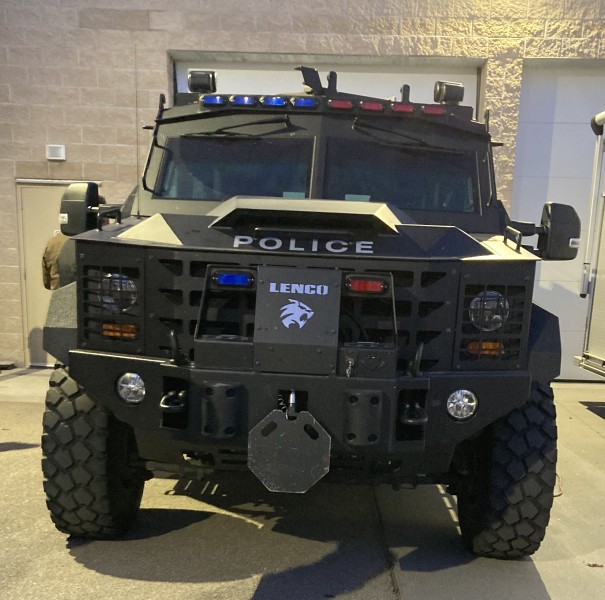
The group moved outside to view three specialized vehicles. The first is their Bearcat armored bullet resistant emergency vehicle. The vehicle was paid for by asset forfeit procedure. They use the vehicle when they have someone who is a high-profile target such as when they commit a violent crime, are in a standoff, and they also support other departments in the region for those needs. They have had it for five years and it was specially made for that purpose. There are a lot of different devices on it including a battering ram and a shield to protect an officer in a firing position on top of the vehicle.
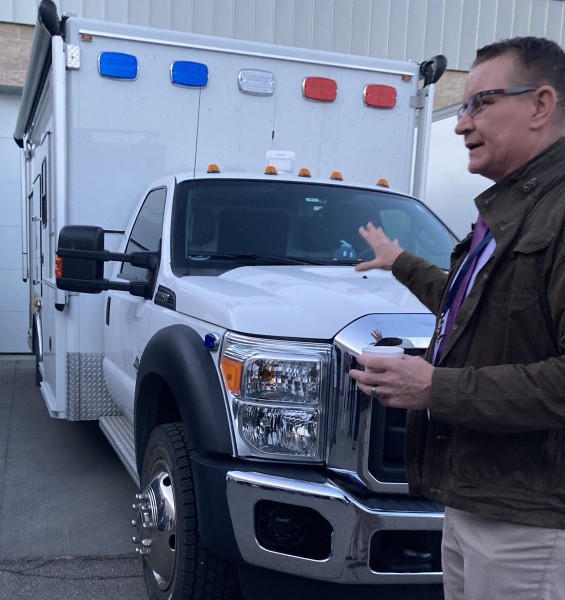
The second vehicle is their bomb truck. They are one of the regional agencies that have a true bomb team; the team members attend training and are nationally certified. They use it every single KSU football game because it is a requirement; they go out and inspect the stadium before games. The bomb team travels around the area to assist other agencies. Last week they assisted the Salina Police Department with a pipe bomb incident. The team will disarm it, destroy it in place, or take it out to the RCPD range and destroy it.
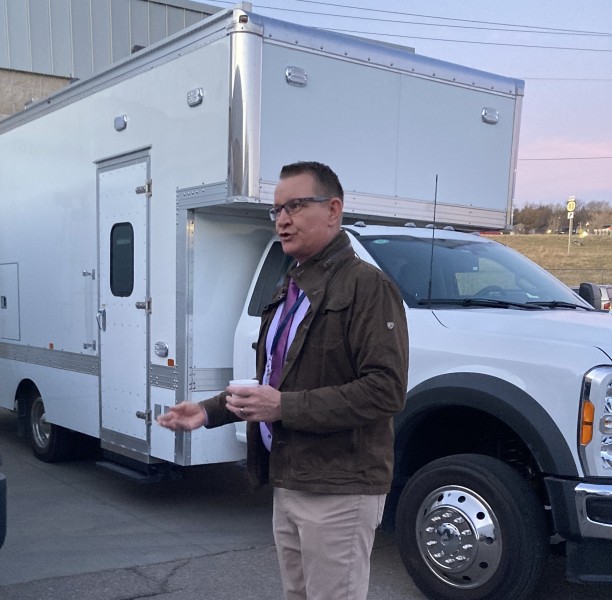
The third vehicle, a hazard materials truck and is used for collecting evidence. It was funded by a federal grant and serves regional needs. It is stocked and ready to go and is capable of dealing with the collection of most materials, except radioactive materials.
These activities are staffed by specially trained officers who also do standard police duty but are compensated for the additional duties. Wednesday is training day and all officers work on this day and receive training.
The group moved to the Law Enforcement building and walk by many of the spaces used by officers and staff: patrol section, investigation division, dispatch center (they do all dispatch for the city and county including fire and ambulance), IT, records, and administration. There were many old pictures along the hallway of Manhattan's law enforcement officers and staff.
The group was handed off to Mark French for information about the jail and a short tour of the jail.
The jail is a 147-bed complex; however, they cannot hold 147 at any one time due to the classification of the individuals. Of course, male or female is one classification, however there are other classifications due to level of potential violence against another inmate etc. When they reach 120, they lose their ability to do classification properly. For instance, the jail is designed to house 18 perfectly behaved females. Jails usually don't hold perfectly behaved individuals, so the realistic capacity is less. When the female population gets over 16, they have to send them to other facilities; the same is true for the male population when it exceeds capacity.
The jail is about 80% pretrial; these inmates have not been convicted of any crime at this point, and some remain two or three years before a trial. The jail was designed to hold people for 18 months. Some are held for years because of a mental health crisis; 35-40% of the inmates are on medication for mental health issues. Over 50% of inmates are on medication for other health reasons. An RN is on contract through a company and provides med services for inmates. He reminded us that we were going into a live jail and it is safe to go into it, but inmates could make comments etc.
Their discipline system is done primarily through a rewards system. There are rewards for good behavoir, and those rewards can be taken away for bad behavior. The jail is the highest liability facility in the community, and they are doing everything possible to keep staff and inmates safe and reduce that liability.
They run the jail with about 5-6 officers and a supervisor on each shift and are allotted 37 officers in the budget. They serve about 400 meals per day. They try to keep meal cost under $3.00 per meal. The cost of meals takes their line-item budget for the year. Laundry was $1,000 per month, and they have brought that down to $600 per month. They are doing everything they can to reduce expenses, without risking safety. The County has been supportive of new technology which helps reduce the need for additional employees.
The group was taken into the jail (Alpha Pod) and was in a commons area. This is a medium classification pod. The red tags on cells indicate they check on those inmates every hour, or shorter times if necessary. The tags are used visually by the officer and are scanned to record that the cell was checked, which provides accountability. Many cameras throughout the jail help provide security and keep the jail safe.
The group left the jail and entered the booking area. When someone is arrested, they are transported in the police vehicle to a sally port, a secure garage adjacent to the booking area. They are first patted down and then scanned with a fully body scan and then placed in one of the several holding cells to await their turn for booking.
They have been upgrading and modernizing the booking area and holding cells to more modern standards. In addition, they have utilized electronic records to eliminate paper ones.
Daryl Ascher picked up the group and showed the group the area with rooms used for processing evidence and secure storage for evidence. He thanked the Optimist for coming and touring their facilities as we exited the facility.
Riley County Police Department Website: https://www.rileycountypolice.org/
Additional pictures are below birthdays.
GUESTS: Our hosts, members of the Riley County Police Department.
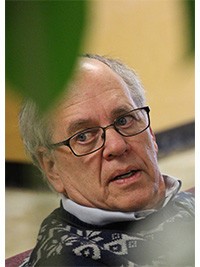
“Bill Wisdom began working at the K-State Student Union in July 1977 as the vending manager. He was promoted to assistant director of retail operations in 2000. During his 38 years of service to Kansas State, Wisdom oversaw several areas of the Union including the K-State Office Supply Store, Union Computer Store, Cats' Den, hair salon, Subway and served as the university liaison with Pepsi. He mentored countless student employees and has always been a huge supporter of K-State. Wisdom graduated in 1972 with a degree in business.”
https://union.k-state.edu/vision-award-0
CONGRATULATIONS TO BILL WISDOM!
Jim Franke announced staffing for the Spaghetti Dinner Saturday, March 28th is complete.
March 20th and 21st Special Olympics Basketball event. Opportunities to volunteer as scorekeepers and many other opportunities go to www.givepulse.com/event/723136 to sign up as well, if you do sign up, please let Bill Wisdom know.
April 22nd is Grow Green Match Day. The Optimist Board will designate a project for the donated funds.
May 13th the IPS Class joint Interpersonal Skills Class Essay Contest winners will read their essays to the group.
Bill Snyder Half Marathon is Saturday, May 23rd. Volunteers are needed to help guide the runners to stay on the course. The race organization donates to the organizations supplying volunteers, so it is an easy way for the Optimist to generate some funding. The half marathon starts at 7:00 am on K-177 near I70 and the 5k starts at 7:00 am at Bill Snyder Family Stadium and both races finish at Bill Snyder Family Stadium. Report time is usually 6:30 am and the location will be available later, though recently it has been near the stadium.
October 24th is our 24th annual Chili Crawl.
Meeting adjourned following the tour.
SAVE THE DATE: Annual Spaghetti Dinner March 28th
MARCH 25 – NOON MEETING: Program: Ariana Swann, Artist & KSU Grad Student – Teaches Animation & Digital Art: Topic: “Does Art Die? – Installation Art”
APRIL 1 - MORNING MEETING: Program: Youth of the Month Presentations: “Amanda Arnold & Flint Hills Christian Elementary”
APRIL 8 – NOON MEETING: Program: Topic: Student of the Month Presentation and “THRIVE!”
APRIL 15 – MORNING MEETING: Program: Manhattan High School Robotics Team: Topic: “MHS Robotics”
APRIL 22 – NOON MEETING: Program: Joe Schartz, Manhattan High School Football Players/Coaches: Topic: “MHS Football – 2025 State Champions”
APRIL 29 – MORNING MEETING: Program: President Kelly Karl: Topic: “Membership Meeting”
MARCH BIRTHDAYS