The "Manhattan Optimist Club Bulletin" Vol. 2026 #32 5-13-26
VOLUME 2026 MAY 13 NUMBER 32
First Vice President Steve Boeckman welcomed the membership and guests, then Bill Wisdom presented a reflection. The flag salute followed.
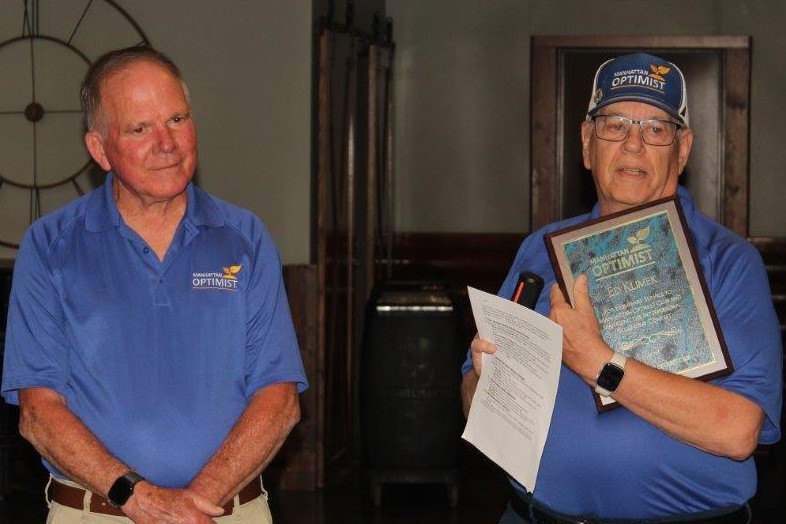
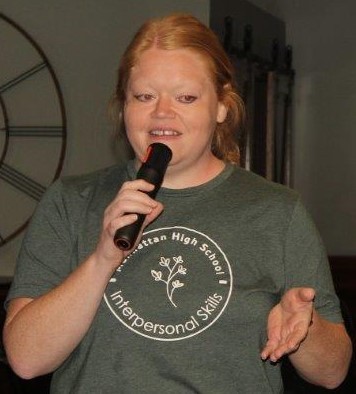
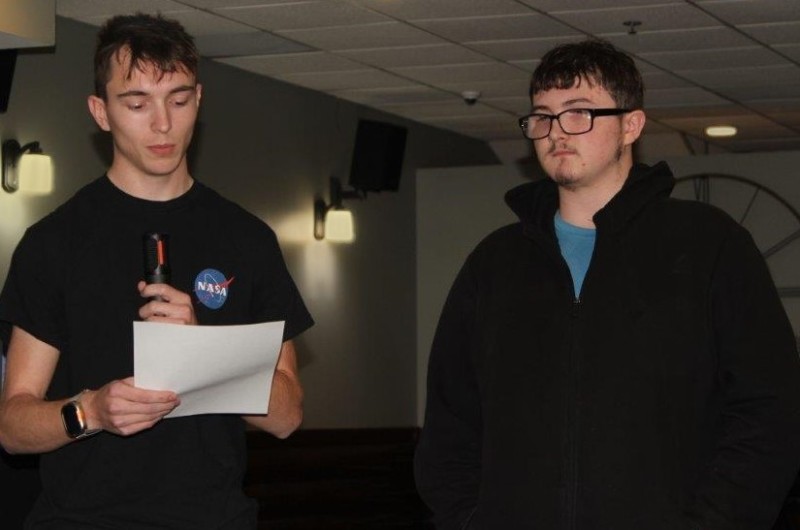
Ed noted there is something magical that happens in the IPS class and it is very special. It is a blending of students with special needs and seniors from MHS. Ed introduced Jamie Schnee, the lead teacher of the Interpersonal Skills class.
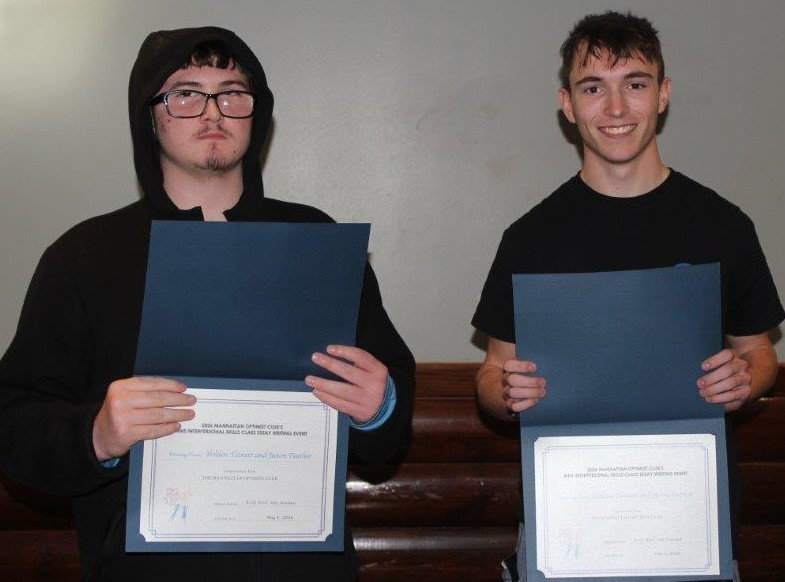
Greg McCune led the judging team composed of Sharon Fincham, Dale Shipps, Jean Klassen, Liz Holle, Kendahl Goetzman, and Julie Brummett. Each student receives a certificate from the Optimist Club and a $100 check.
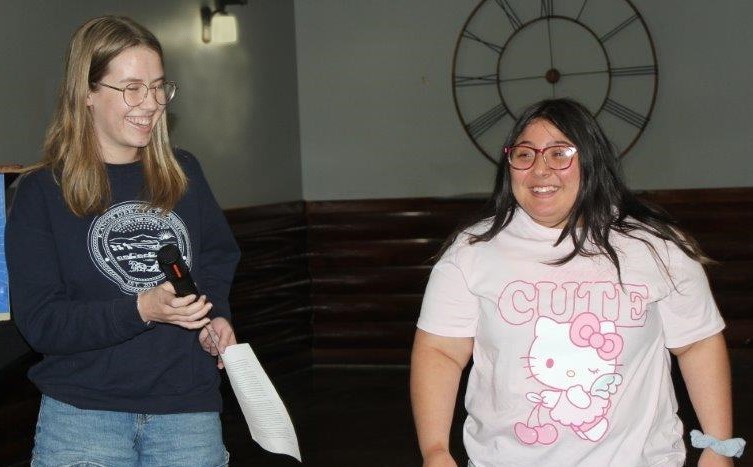
At first glance, Student 1 and Student 2 couldn't be more different. While 1 is often outgoing and talking to people she doesn't know how to make friends, 2 tends to stick to her usual group and stay quiet. However, through interviewing and getting to know each other, they found out that they aren't so different. When it comes to getting tasks done, they both struggle with the anxiety of completing them.
1, who is currently in 10th grade, grew up with three brothers and one sister. She likes to do drama class, hang out with friends, and go to Boys and Girls club. A new thing she's trying is basketball. In the interview, she expressed that one of her current challenges is basketball. Running, dribbling, and multitasking all in a loud environment is something that she has had to learn to do while managing her anxiety. While being in a new, loud setting is difficult, 1 said that something that helps her is controlled breathing. Breathing in for six seconds, holding it, and slowly letting it out has been beneficial in helping 1 adapt to these difficult situations where she often can't focus. IPS has been a significant helper in her life. She said that doing recycling, newspapers, and moving around helps her stay focused. 1 believes that it's important to share these challenges so that people can help. It's easier to go through things together rather than alone. She's shared her struggles with teachers, so that they can better help her adapt.
2, a current senior, grew up the youngest of five. She has three sisters and one brother, opposite of 1. 2 does speech and debate, often spending most of her time in E-139. On the weekends, when she isn't at another school competing, 2 enjoys reading and hanging out with friends. Going out every weekend is an issue, though, because it means tasks build up. Schoolwork, chores, and everything in between culminate into a mess that gets overwhelming. And, when the list gets too long, 2 freezes and can't complete any of the tasks. To get over this, she's learned to slow down and rationalize the tasks in her head. Working on sections, seeing a fraction of the picture, instead of getting overwhelmed by the entire picture, has been beneficial in being able to manage her anxiety. IPS has helped 2 through providing a place where she learns to adapt to situations that arise in nonlinear fashions. She believes that it's important to share struggles not only so that people can help, but so that others know that they're not alone, no matter how small their issue is.
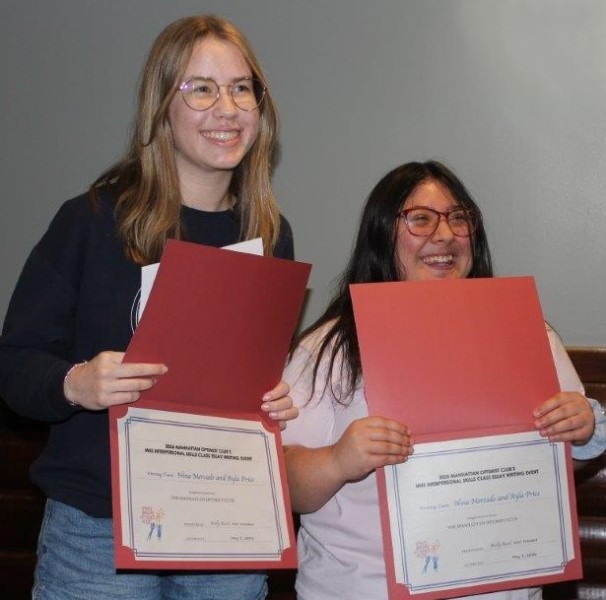

It is nearly impossible to know what people go through just by looking at them. The person next to you at this very moment could be struggling at this exact second and is not showing any indications of struggle. Struggle is different for everyone, for one person it may be physical and visible, for another it could be internal and invisible. Interpersonal skills (IPS) is more than a class where students play games, it gives students the opportunity to grow into active community members and to learn about disability's and themselves. Day to day difficulties is not always about trying to fix a problem but learning how to adapt to it.
Student 1 finds their challenges are rooted in fine motor skills and focusing on certain things for a set duration of time. "simple" tasks like using a tv remote can lead to frustration. Student 1 finds it hard to keep focus in a fast-paced environments and initiate conversation with new people. Student 2's challenge is internal. With the unpredictability of unstable mood swings and the paralyzing grip of anxiety, the challenge isn't necessarily a task itself, but the daily mental battle of whether doing, saying or even going somewhere is worth even the possibility of something going wrong and setting of a chain reaction of emotions that feel uncontrollable.
While each student deals with their obstacle differently, each way is effective for one's situation. Student 1 has found that pushing through and continuing try a task (whether it be reading, holding a pencil, or holding a conversation); with patience and persistence, they are able to learn how to do something new or more comfortably about everyday. Student 2 uses a strategy of emotional regulation and self-awareness. Overcoming anxiety involves identifying triggers and learning why certain things make them feel a certain way. Student 2 works on skills to help regulate themself so they can communicate effectively what they feel/need. For both students, overcoming something is a continuous thing, not just a one and done.
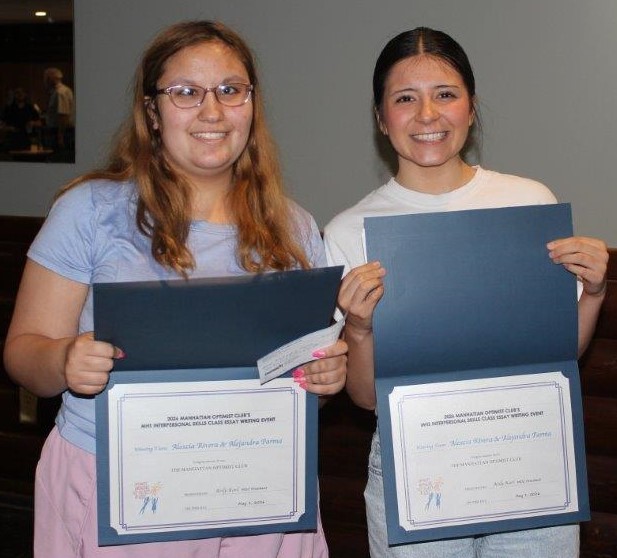
One of the best ways to better understand yourself is to look at things through another person's perspective. For this essay we were paired up with a peer from our Interpersonal Skills (IPS) class, where individuals with all sorts of personalities, challenges, and abilities learn and grow with each other. Our task was to interview each other and discuss the challenges we face in life and how we overcome them. Throughout this process we learned that our outlooks on life were remarkably different, but we also had many similarities. We learned that some challenges are loud and obvious, some are quiet and well hidden, and some are simply part of who we are. Through our work together, we learned that both of us display a unique trait of incredible strength that looks completely different.
Student 1 is lively, outgoing, and loves connecting with people. She enjoys playing Roblox, with playdough, and on the playground, and dancing, especially jumping. Her favorite song is Let It Go which is from her favorite movie, Frozen. When asked about the challenges she faces, she said she didn't feel she had any. This really stuck with Student 2, who greatly struggles with internal challenges. She was inspired by this view that focuses on what you can do, not what is challenging. Student 2 enjoys dancing just like Student 1 along with baking and spends hours studying trying to prepare for college and get good grades. While she may appear confident on the outside, she constantly battles anxiety, perfectionism, and shyness around new people. She often holds herself to impossible standards and worries that she is not doing well enough. These invisible challenges significantly impact her daily life, even though others might not notice.
Although our experiences are different, we both strive to approach all challenges with a positive mindset. Student 1 stays calm when facing challenges but also often finds support in talking to and being with others, specifically her mom. For Student 2, staying calm does not come as easily, however she also leans on her mom to help her put things in perspective and reassure her. Both forms of resilience are equally important, whether it comes naturally or through daily effort.
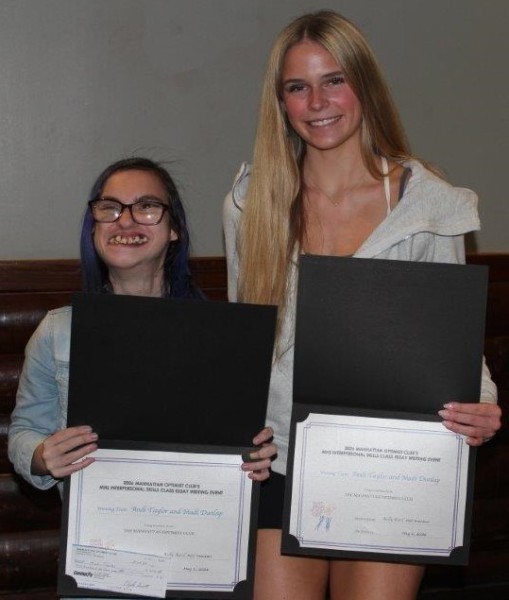
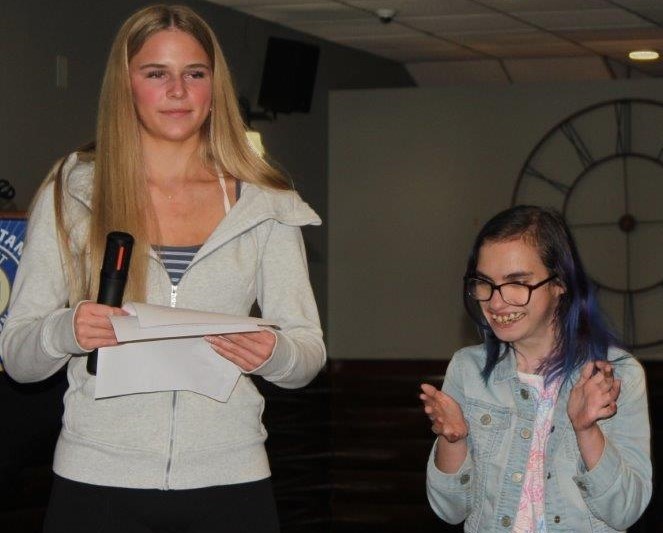
Everybody carries a different weight that others might not see. Some struggles are obvious, while others hide entirely beneath the surface. In our Interpersonal Skills (IPS) class, we interviewed each other to understand the unique challenges we face every day. Even though we come from different backgrounds and hobbies, we discovered we share a common obstacle in connecting and communicating with others, especially people we do not know well. Through IPS, we have learned that our challenges do not define us. Instead, they give us opportunities to grow stronger, more confident, and more understanding.
Student 1 is a junior at Manhattan High School who enjoys playing video games, spending time with friends, and playing different sports, especially basketball. Their biggest challenge is starting conversations and forming connections with new people. This makes it difficult to make friends quickly or ask for help when needed. Student 2 is a senior who enjoys being active outdoors, participating in robotics, and playing on the golf team. While they are involved in many activities, they also struggle with communication and stepping outside of their comfort zone in unfamiliar social situations. Although our interests are different, we both experience the same hesitation when it comes to interacting with others.
IPS has helped Student 1 become more confident by providing consistent opportunities to interact with new people in a comfortable environment. During gym days, especially when playing basketball, Student 1 has been able to come out of their comfort zone. It has allowed the student to talk with others, feel more confident, and learn to be more natural when starting conversations. Through time, small movements build confidence that has been able to help in everyday life. For Student 2, IPS helped by encouraging participation and stepping into situations that once felt uncomfortable. During group activities, they have been able to talk and build new friendships with people. This has helped the student overcome challenges at the same time as others. These experiences made communication feel less intimidating and more natural.
About 30 Optimist attended the baseball game tailgate and game. Thanks to all who came out!
https://manhattanoptimist.itemorder.com/shop/home/
Bill Snyder Half Marathon is Saturday, May 23rd. Volunteers are needed to help guide the runners to stay on the course. The race organization donates to the organizations supplying volunteers, so it is an easy way for the Optimist to generate some funding. The half marathon starts at 7:00 am on K-177 near I70 and the 5k starts at 7:00 am at Bill Snyder Family Stadium and both races finish at Bill Snyder Family Stadium. Report time is usually 6:30 am and the location will be available later, though recently it has been near the stadium.
Gary Lloyd announced the Musical Instrument Recovery Drive posters were out and available for Optimist to put up in local businesses etc. (See poster below after Birthdays)
Bill Wisdom awarded Greg McCune, who was president at the time, a certificate from Optimist International for leading the club to the status of a Honor Club.

SAVE THE DATE: October 24th is our 24th annual Chili Crawl.
MAY 20 – MORNING MEETING: Program: Brent Sigman: Topic: “Columbian Theatre”
MAY 27 - NOON MEETING: Meeting: Program: Allan VanNahmen, local auctioneer: Topic: “Auctioneering”